
Why Traditional DLP Falls Short With AI
AI creates new paths for sensitive data to leave your organization, from prompts and file uploads to AI-generated responses and connected applications.

Sensitive data enters prompts
Employees can paste customer records, financial data, credentials, source code, or confidential documents into AI tools without realizing the exposure.

AI tools sit outside your control
Public and unsanctioned AI tools can receive sensitive data without the visibility, policies, or controls applied to approved enterprise applications.

Files can expose more than prompts
Documents, spreadsheets, code, and images uploaded to AI can contain sensitive information that traditional DLP controls may not inspect in context.

AI can return sensitive data
AI responses can reproduce confidential information from prompts, connected data sources, or application context, creating another path for data exposure.


AI Is Creating New Data-Loss Paths
AI is changing where sensitive data goes. Most organizations still lack visibility and controls across those new AI data flows.
AI data exposure is widespread
88%of organizations using generative AI recorded at least one high-risk prompt containing sensitive data in July 2026, according to Check Point's 2026 AI Threat Landscape.
Sensitive data is entering AI prompts
4%of GenAI prompts contained sensitive corporate, personal, or regulated data by the end of Check Point's 2026 AI Security Report, up from 2% a year earlier.
AI data flows remain hard to track
44%of organizations cannot trace where sensitive data goes once it enters an AI workflow, according to Check Point's 2026 Cloud Security Report.
AI-specific DLP is still rare
15%of organizations have deployed DLP controls specifically designed for AI data flows, according to Check Point's 2026 Cloud Security Report.
How LangProtect Prevents Data Loss in AI
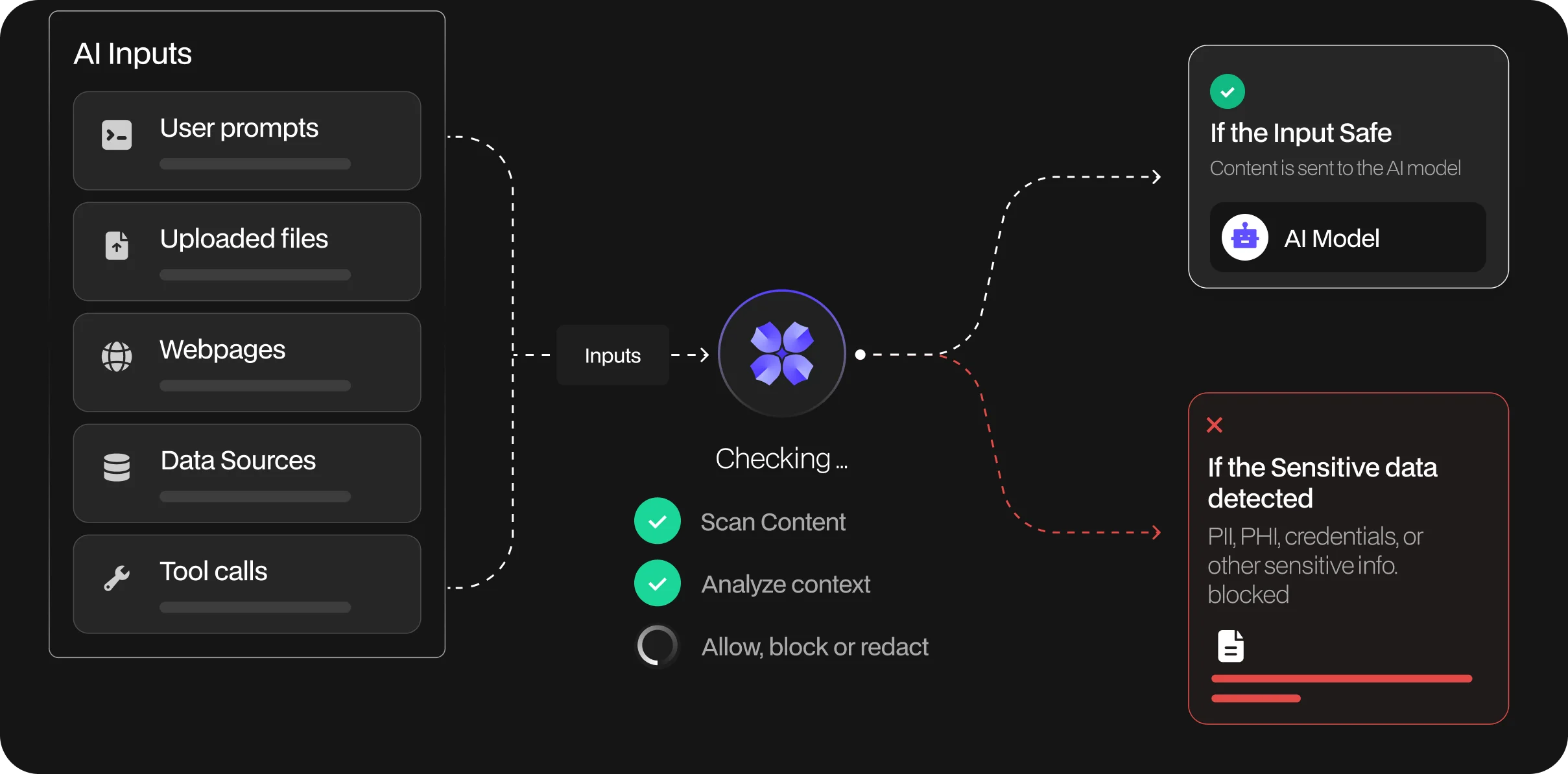
LangProtect inspects AI interactions in real time to detect sensitive data, apply policy, and stop unsafe data flows before they become a leak.
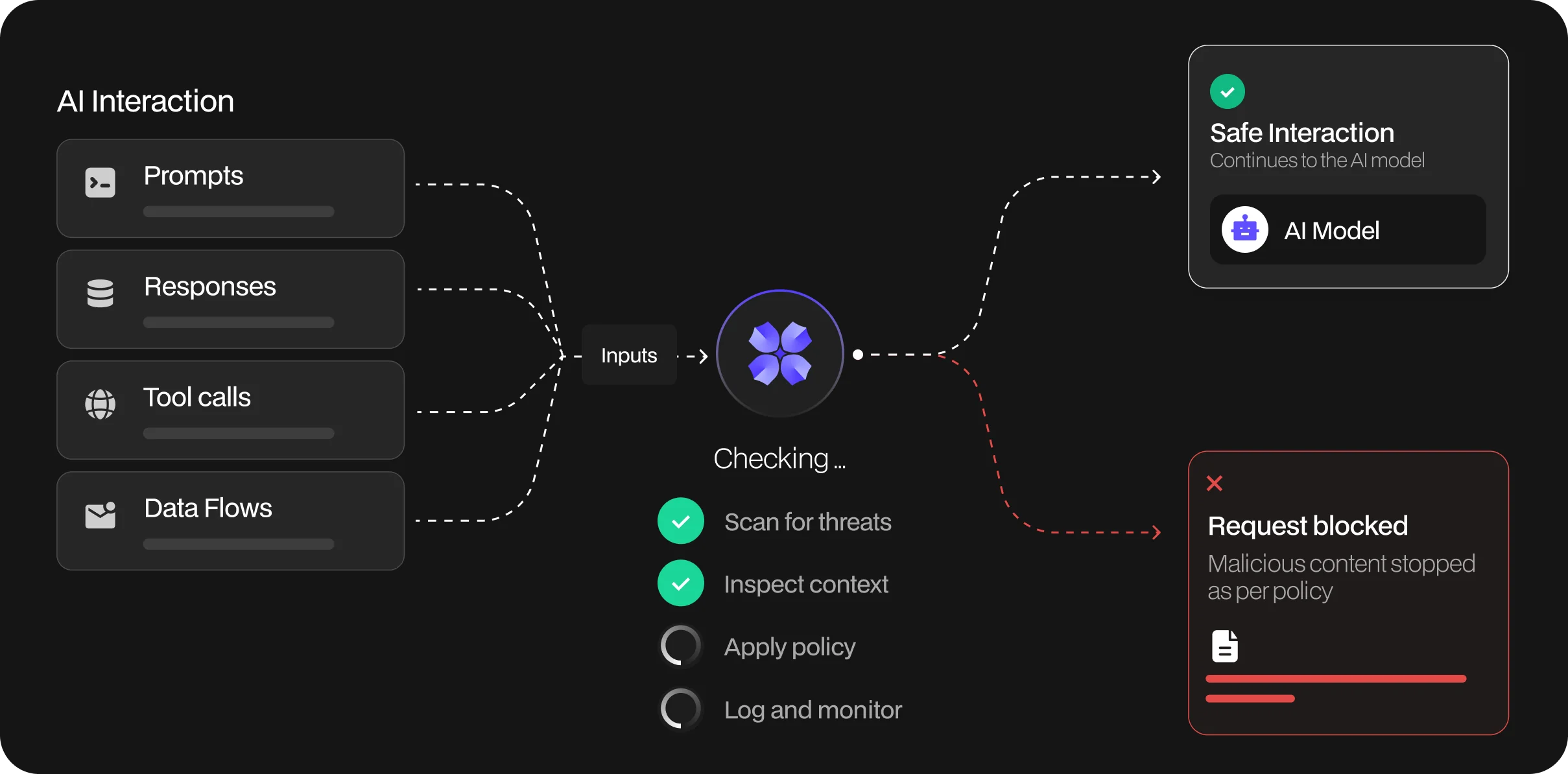
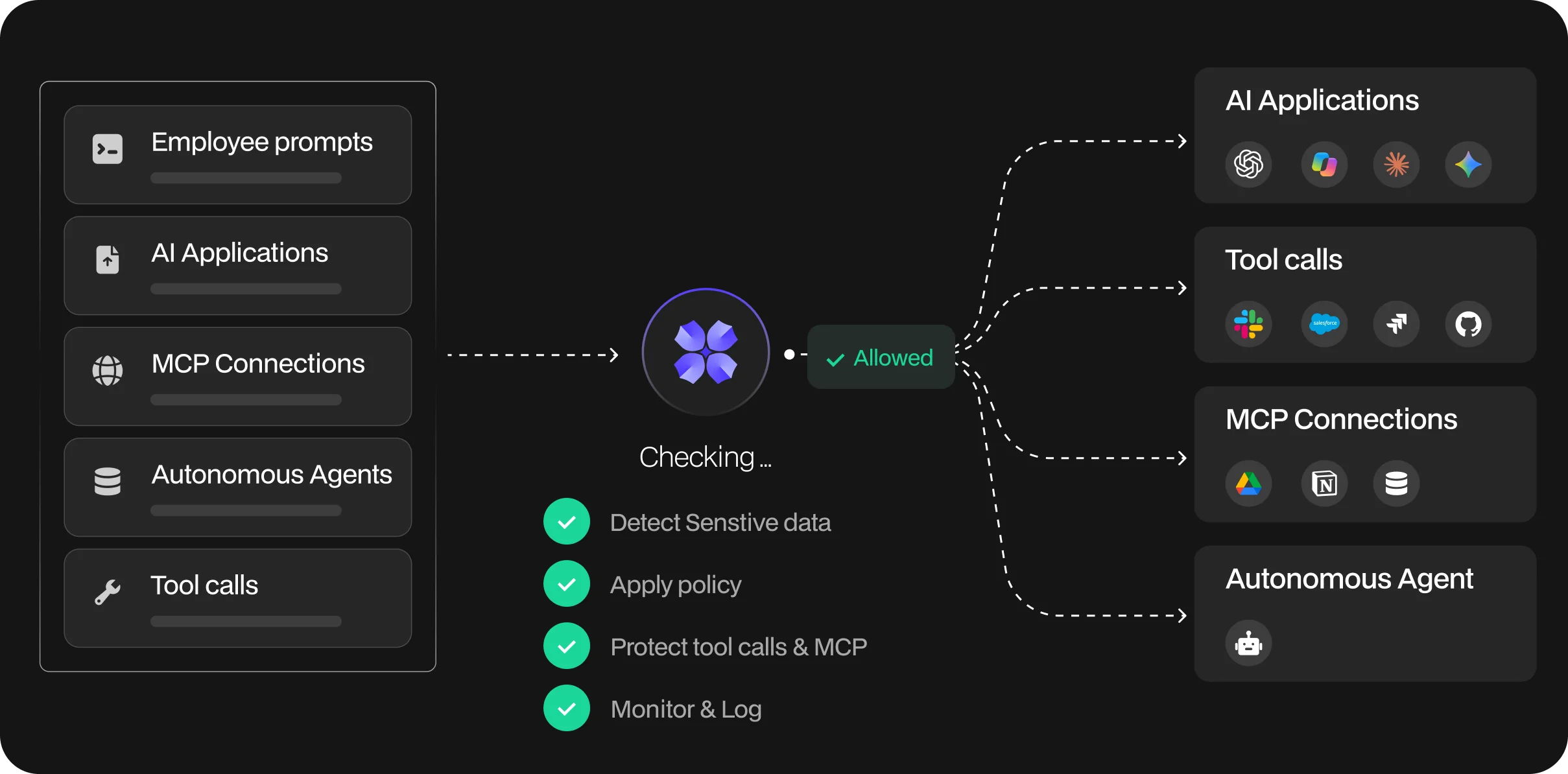
LangProtect sits at the AI interaction layer, inspecting prompts, responses, tool calls, and data flows as they happen.
Built to Protect Sensitive Data Across the AI Stack
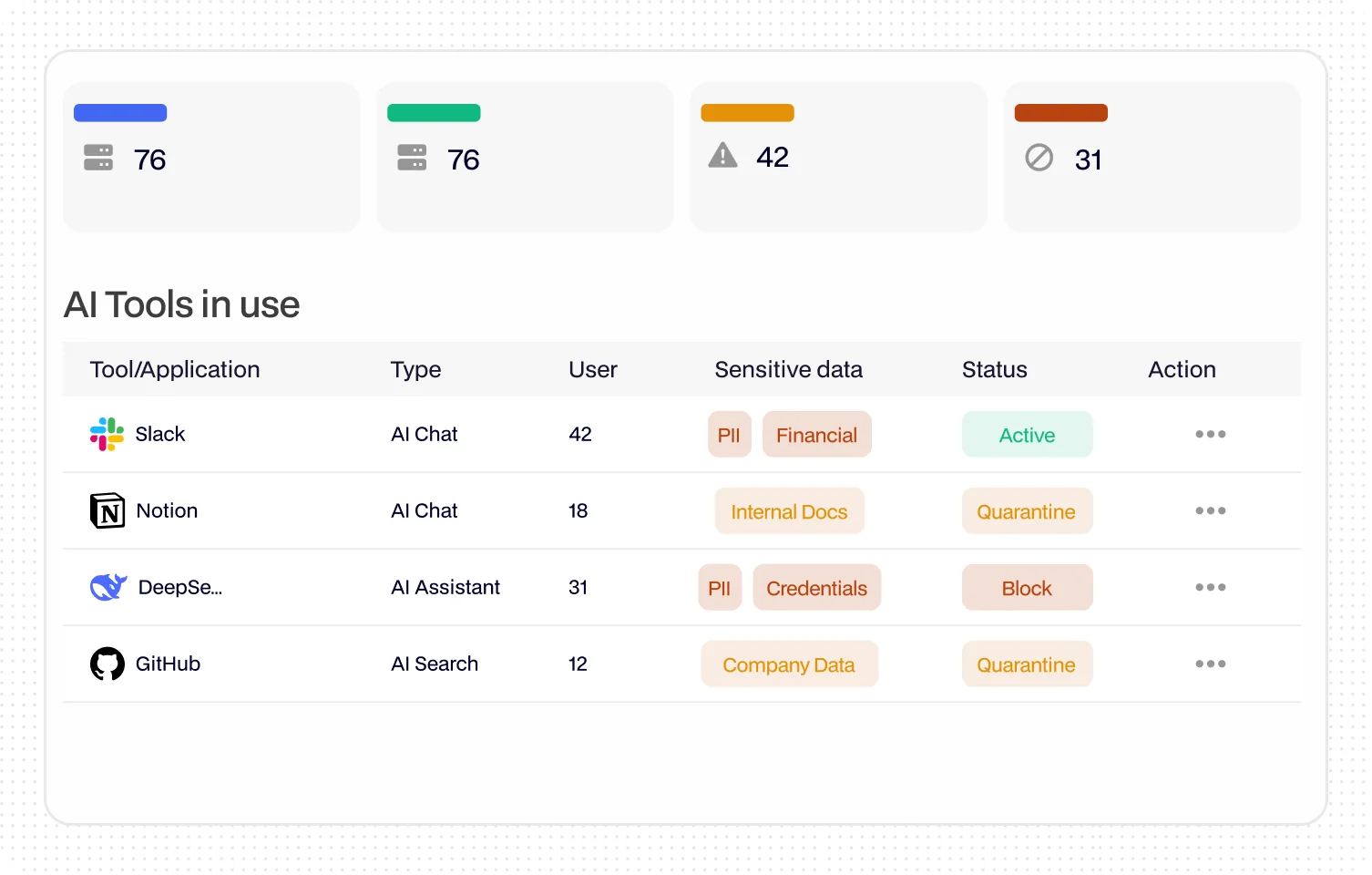
1. Discover AI Data Exposure
Identify where employees, applications, and AI agents are sending or processing sensitive information. LangProtect gives security teams visibility into AI tools and interactions so they can understand where data is entering the AI ecosystem.
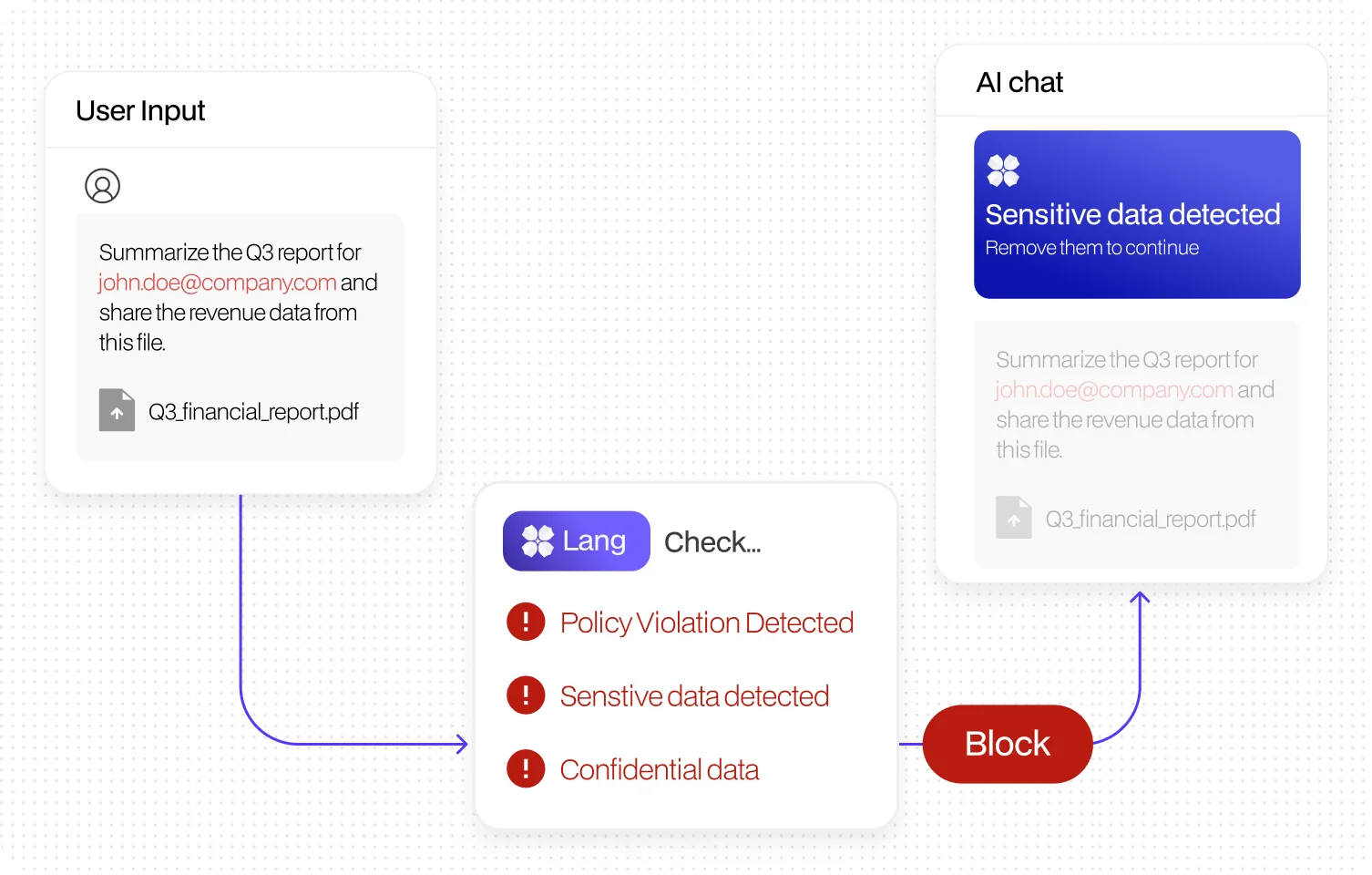
2. Inspect AI Interactions in Real Time
Analyze prompts, file uploads, model responses, and AI-driven interactions as they happen. Instead of relying on after-the-fact logs, LangProtect evaluates data at the point where it moves into or through an AI workflow.
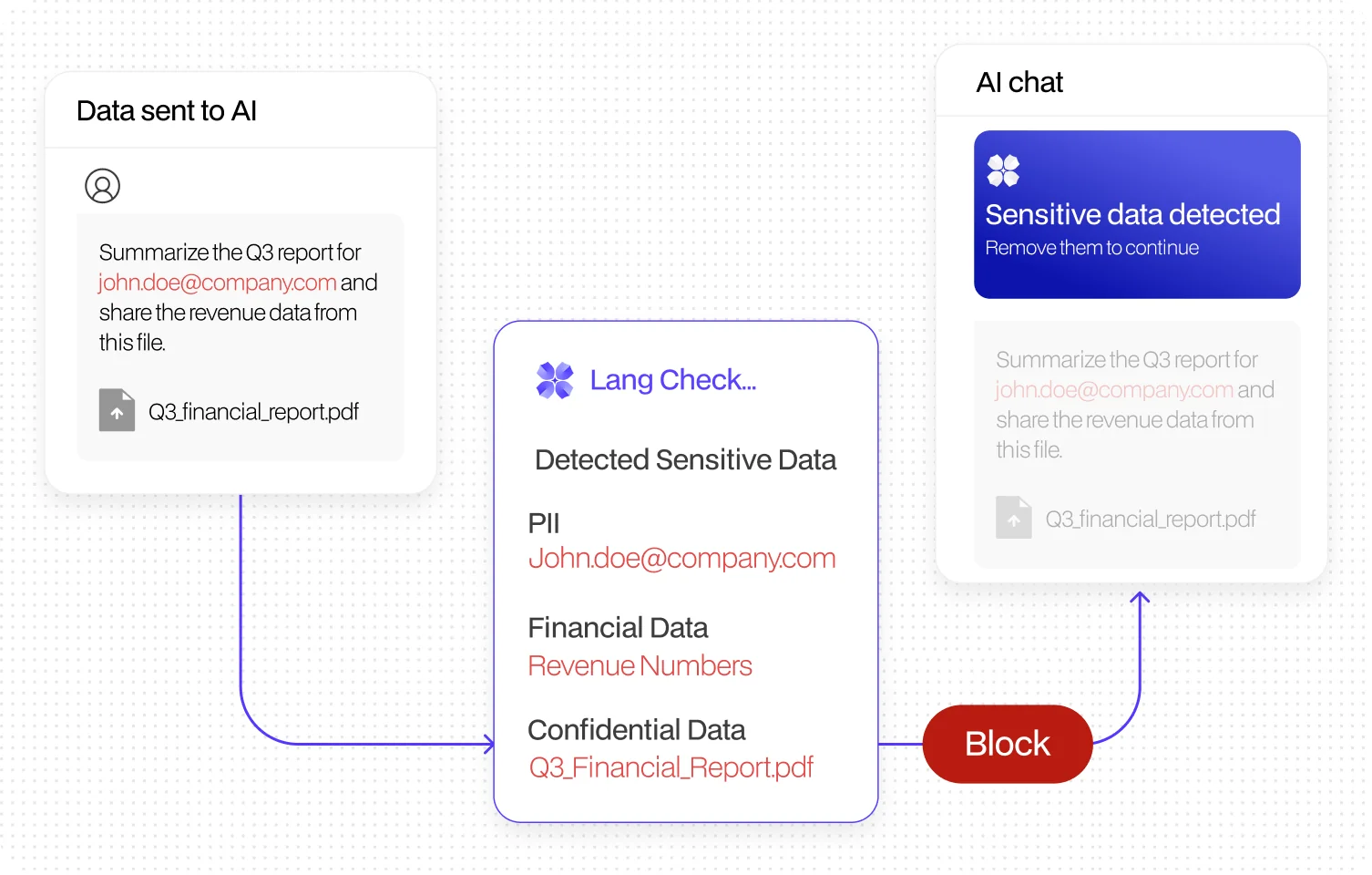
3. Detect Sensitive Data With Context
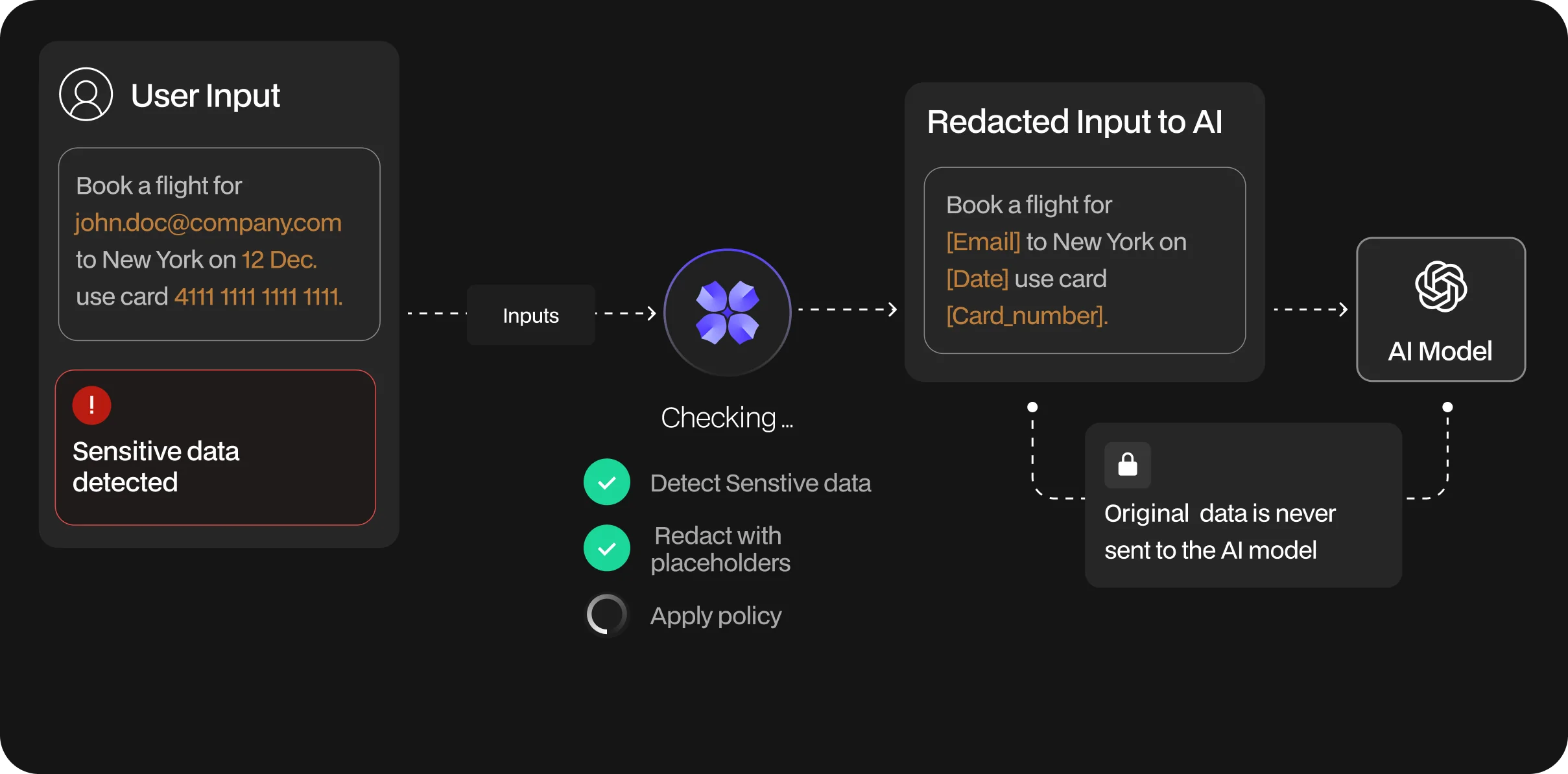
Identify sensitive information including PII, PHI, credentials, secrets, and other regulated or confidential data. Context-aware detection helps distinguish meaningful exposure from ordinary AI conversations and apply the right protection policy.
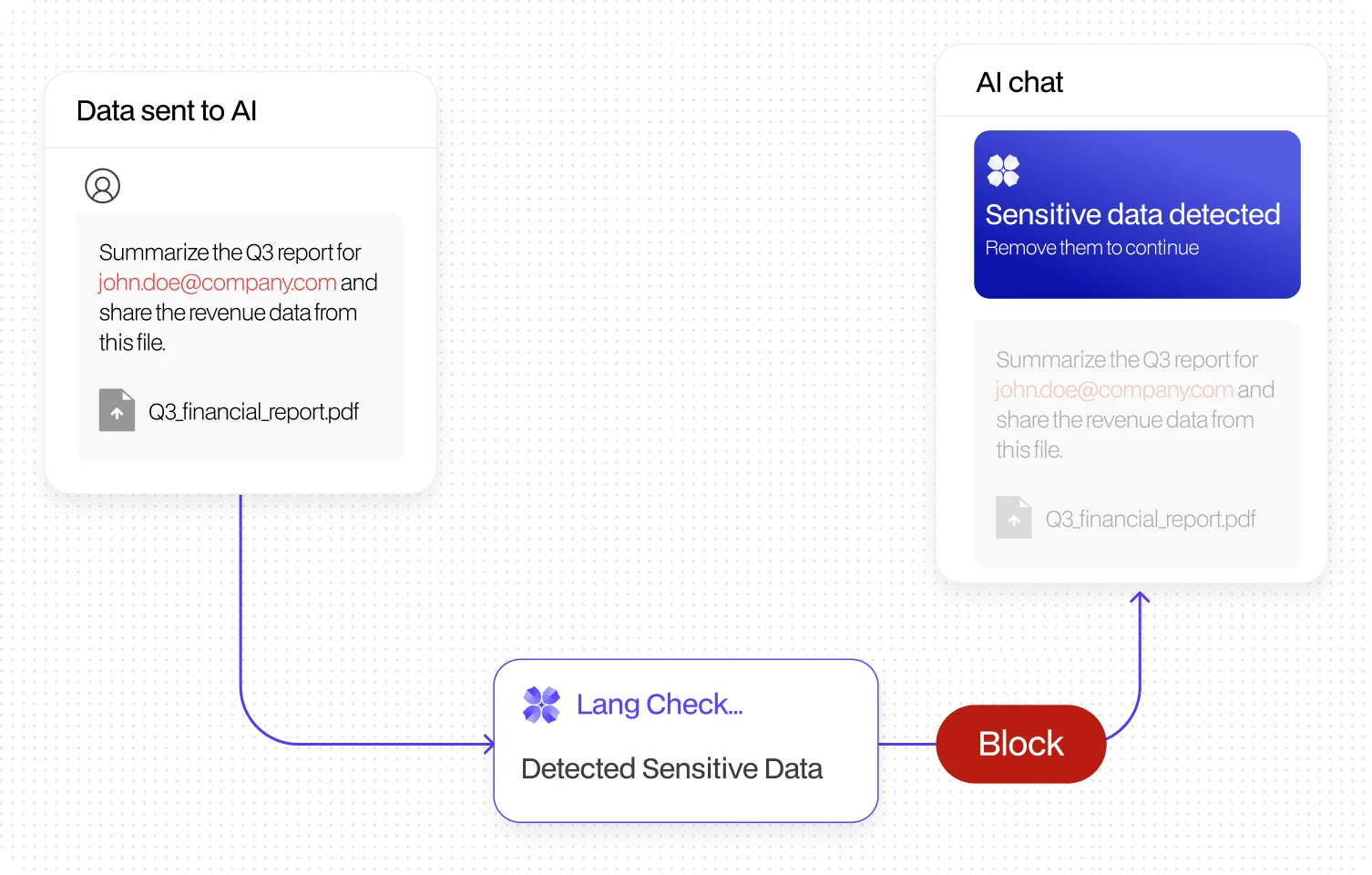
4. Redact or Block Before Data Leaves
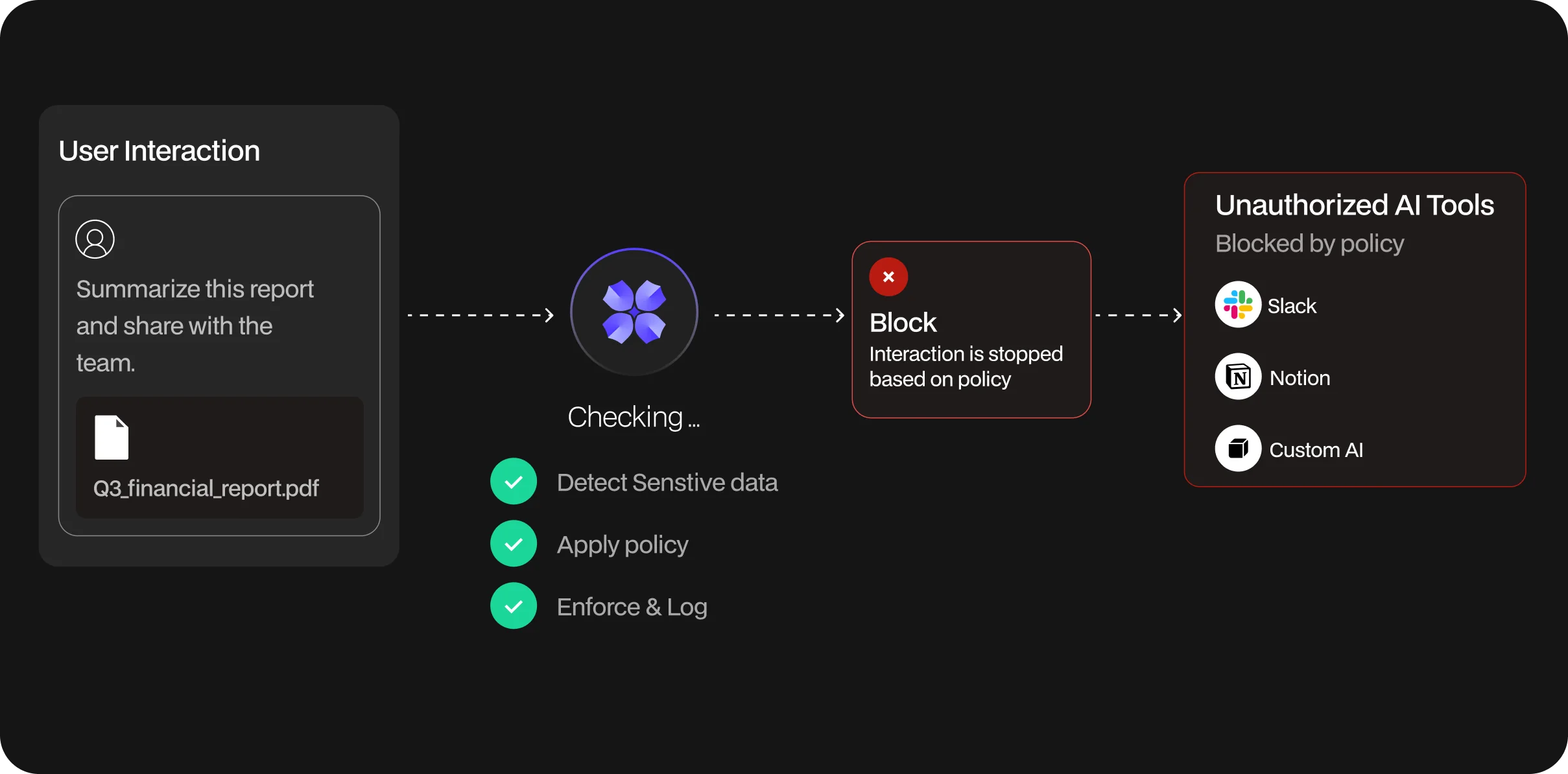
Take action before sensitive information reaches an unauthorized AI destination. LangProtect can redact detected data while preserving the usefulness of the interaction, or block the request entirely when the policy requires it.
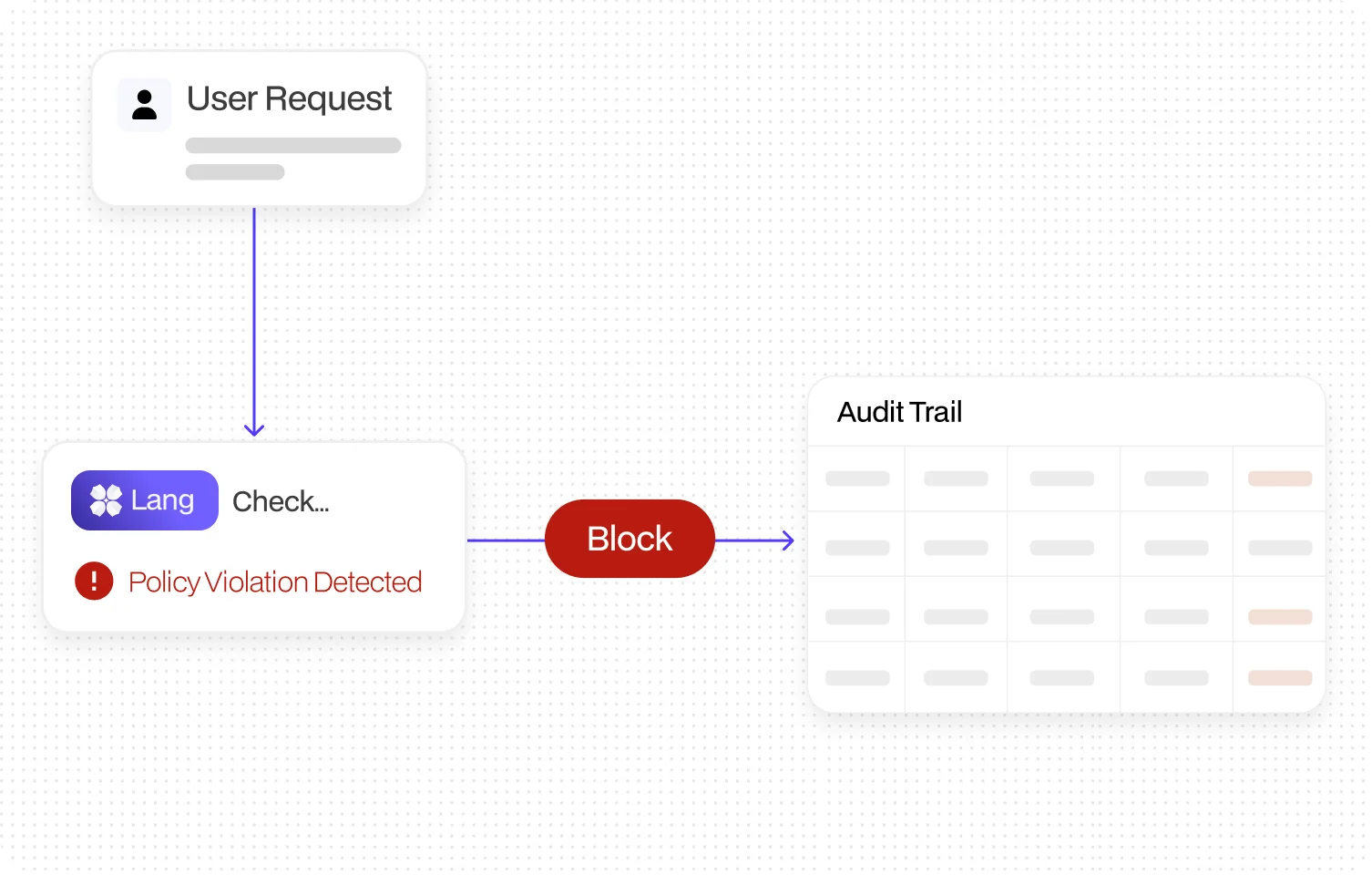
5. Enforce Policies and Maintain Visibility
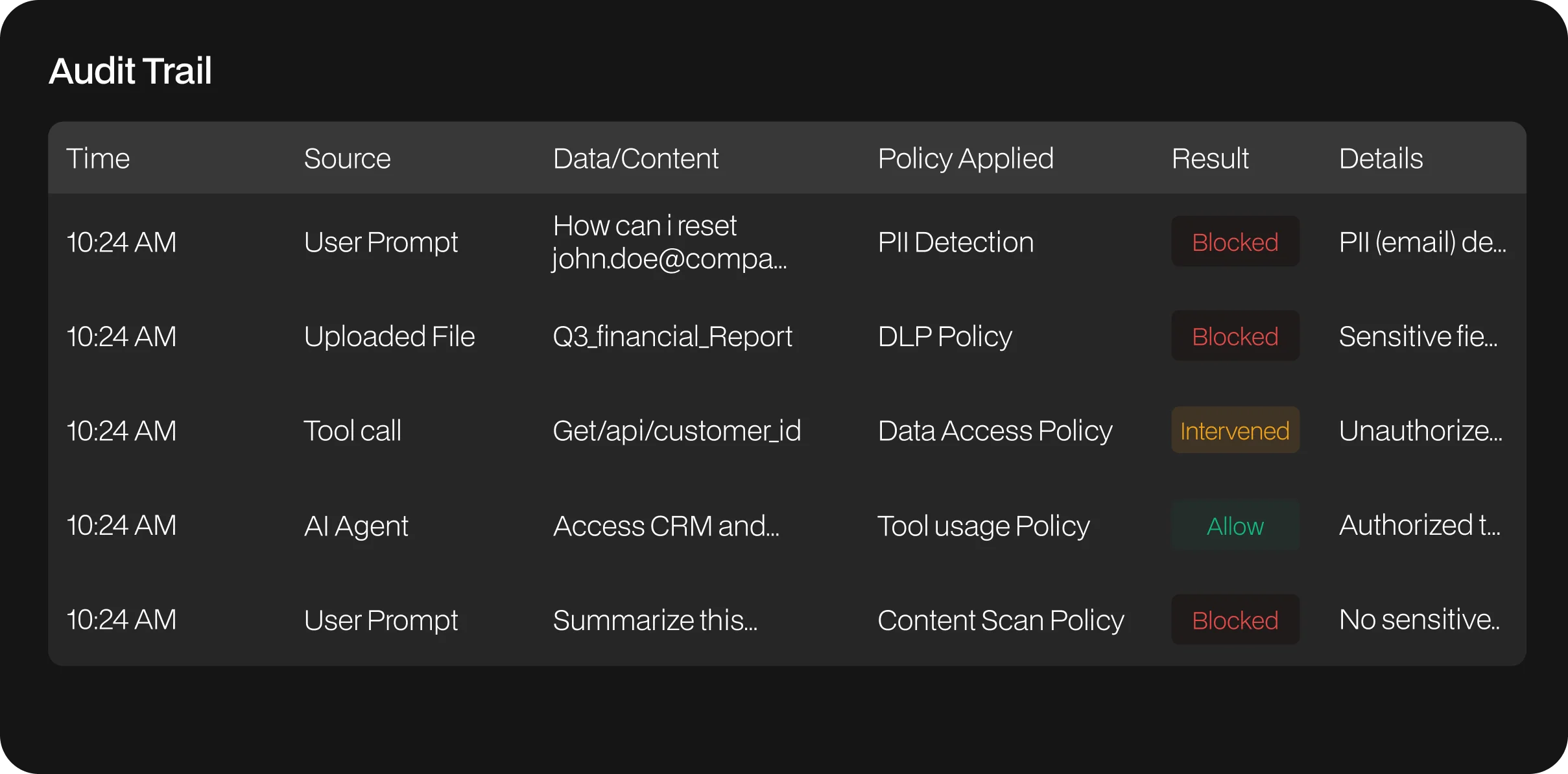
Apply organization-defined policies based on the user, AI tool, data type, interaction, and risk. Every enforcement decision can be tracked, giving security teams an audit trail of what was detected, what action was taken, and why.
Protect Your Data Before It Reaches AI
Detect, redact, and block sensitive data before it reaches unsafe AI tools or workflows.