
Runtime Enforcement for Homegrown AI Applications
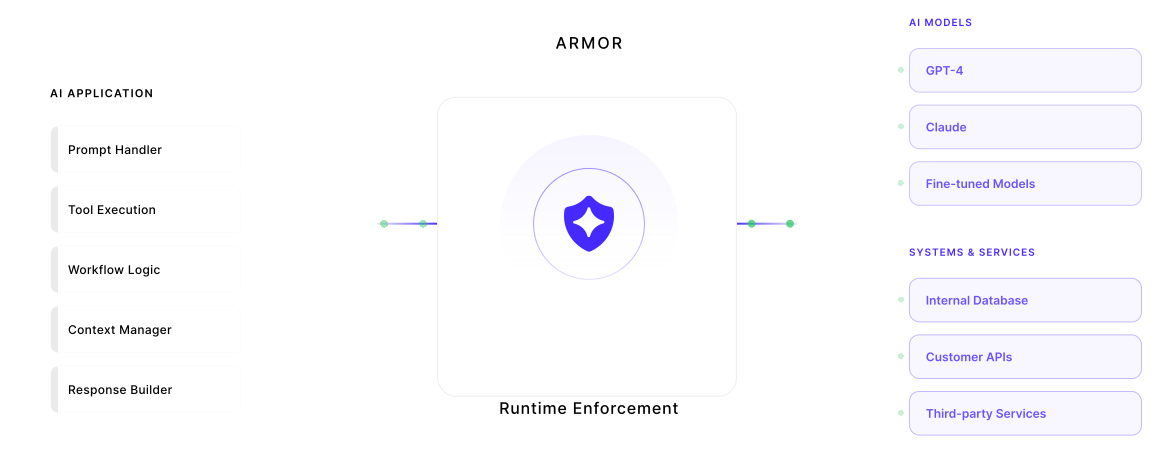
Armor is an inline security layer for AI applications your organization builds and operates. It enforces policy decisions on prompts, model outputs, and execution paths at runtime, before AI systems access internal data, tools, or downstream services.
Why AI Apps Need Runtime Guardrails
AI applications introduce a new execution layer where traditional controls have limited visibility. Guardrails must operate at runtime, when prompts, context, and outputs interact with real data and real systems.

Risk in Open-Ended Inputs
AI applications accept free-form text and dynamically generated context. Unlike traditional software, inputs cannot be fully validated ahead of time, increasing the risk of unexpected behavior at runtime.

Data Can Propagate
Once internal data is introduced into prompts or context, model outputs can unintentionally propagate that data into logs, responses, or downstream systems.

Model Behavior Can Be Manipulated
Application inputs can be crafted to influence how a model reasons or responds, leading to outputs that deviate from intended product or security constraints.

Security Controls Lack Coverage
Traditional security tools are not designed to inspect prompts, responses, or AI-driven decisions, leaving a critical execution layer unprotected.

Outputs Can Trigger Downstream Actions
AI responses are increasingly passed directly to tools, APIs, and services. Without control, unsafe outputs can lead to unintended system behavior.

Failures Surface in Production
Most AI issues do not appear during development or testing. They emerge under real inputs, real data, and real workloads in production environments.

How Armor Works
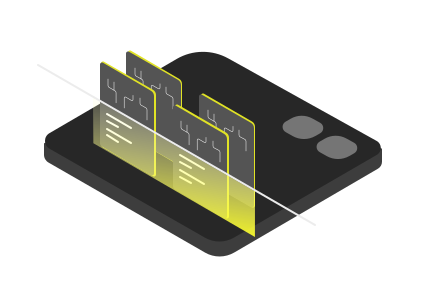
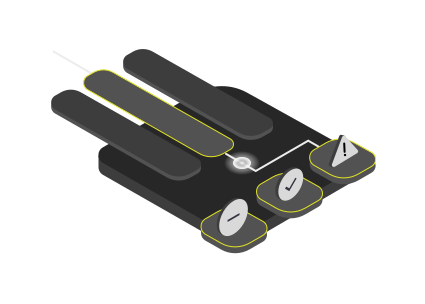
Armor enforces security decisions at execution time, when AI applications interact with real inputs, real data, and real systems.

Armor operates inline with the AI application’s request–response flow, observing interactions as they occur during execution rather than after the fact.


What Armor protects against
Armor enforces controls at runtime to prevent AI applications from performing unsafe or unintended actions as they interact with data and systems.

Prompt Injection via App inputs
Detects and constrains manipulated or malformed inputs designed to alter application behavior or bypass intended controls.

Unsafe or non-compliant outputs
Restricts responses that violate internal rules, compliance requirements, or product-defined constraints.
Tool / API misuse
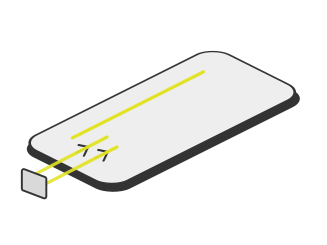
Controls how AI applications invoke internal tools, functions, and external APIs to prevent unintended or unsafe actions.

Unexpected execution paths
Identifies and constrains abnormal runtime behavior that deviates from expected application logic or execution flow.
Sensitive data exposure
Prevents AI-generated outputs from returning or propagating confidential, regulated, or proprietary information beyond approved boundaries.

Unauthorized data access
Blocks AI-driven access to internal databases, services, or resources that fall outside defined access policies.
Built for Enterprise Security Teams
Armor is designed to fit into enterprise security environments, giving security teams control and accountability over how AI applications behave in production.

Centralized Policy Control
Define and manage AI security and data-access policies in one place, applied consistently across protected AI applications.

Role-Aware Access
Limit who can view, manage, or modify AI enforcement policies and logs based on organizational roles.

Audit-Ready Decision Records
Maintain structured records of enforcement decisions, including what was allowed, restricted, or blocked during execution.

Integration-Friendly Architecture
Designed to integrate with existing security workflows and tooling without requiring changes to AI models or application logic.

Clear Ownership Boundaries
Separate product responsibility from security enforcement, allowing teams to move fast without bypassing controls.

Enterprise-Grade Operation
Built to support production environments where stability, predictability, and accountability matter.
Use Cases
Armor supports real-world AI usage across teams by preventing common risks before they turn into incidents.
AI Applications Accessing Internal Databases
When AI applications retrieve or reason over internal datasets, Armor enforces runtime policies to prevent unauthorized access and unintended data exposure during execution.
Agent or Tool-Based Workflows
For AI agents that invoke internal tools, services, or APIs, Armor constrains execution paths to ensure actions remain within approved operational boundaries.
AI Responses Passed to Downstream Systems
When generated outputs are consumed by other services or automation layers, Armor evaluates responses before they propagate, reducing the risk of unsafe or invalid downstream actions.
Compliance-Sensitive AI Features
For AI functionality operating under regulatory or internal policy requirements, Armor enforces consistent controls during execution to support compliance and governance needs.
Production AI Incident Prevention
By enforcing policies at runtime, Armor helps prevent unsafe interactions from escalating into production incidents that impact systems, data, or users.
Production AI Incident Prevention
By enforcing policies at runtime, Armor helps prevent unsafe interactions from escalating into production incidents that impact systems, data, or users.
Built-In Runtime Scanners for AI Execution
Armor applies a set of built-in scanners at runtime to evaluate AI inputs and outputs, with the flexibility to tailor enforcement to application-specific and organizational requirements.
Frequently asked questions
See How Runtime Enforcement Works in Production
Understand how Armor applies layered controls across prompts and outputs to reduce AI execution risk.
100,000+
Prompts Detected
5,200+
AI Tools Monitored
30+
Policies Applied
99%
Sensitive Data Coverage
<200ms
Risk Detection