
The gaps AI agents open in enterprise security
Agents don't need to break in. They act with access you already granted, through tool calls your IAM, DLP and network controls don't inspect.

Shadow MCP servers go live unreviewed
A developer adds a few lines to an agent's configuration file, and the agent now reaches a server security has never seen. That server can expose tools that delete records, deploy code or send email, and nothing inventories, reviews or blocks it before the first call runs.

Every user inherits the agent's API key
MCP servers commonly authenticate the application, not the person. One API key or OAuth grant covers every user of the agent, so a contractor's agent can update the CRM or query a production database with an admin's reach. Your RBAC stops at the app boundary.

Tool output can hijack agent actions
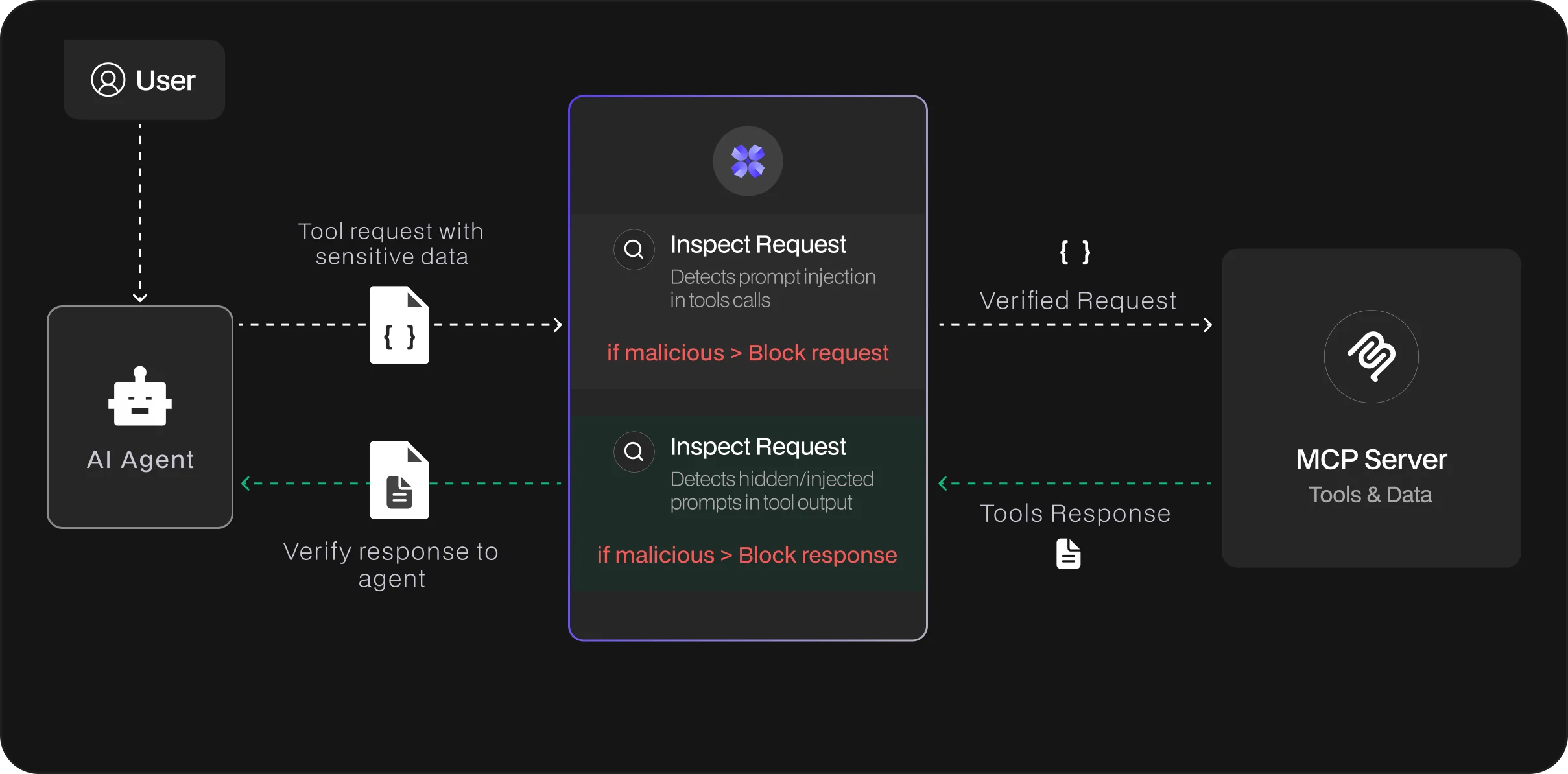
Agents pass tool responses straight into their context. An instruction hidden in a scraped web page, a ticket or a retrieved document can steer the next tool call. Your existing controls then see a valid request with valid credentials.

No user identity in the audit trail
When an agent deletes records or emails a customer, the log shows a service account and a timestamp. It records no initiating user, no agent ID and no policy decision. Incident response starts with guesswork, and "who approved this?" has no answer.


AI Agents Are Creating New Security Risks
IAM, DLP, and network controls were designed around human users and approved applications. AI agents act through tool calls that those controls were never built to inspect, and adoption is outpacing oversight.
of organizations expect to use AI agents at least moderately by 2027, as agents move from pilots into production workflows.
of organizations have a mature governance model for agentic AI. Most are scaling agents without defined oversight.
of organizations say their AI agents have already taken unintended actions, including accessing systems they were not authorized to use.
of organizations report that their AI agents have been tricked into revealing access credentials.
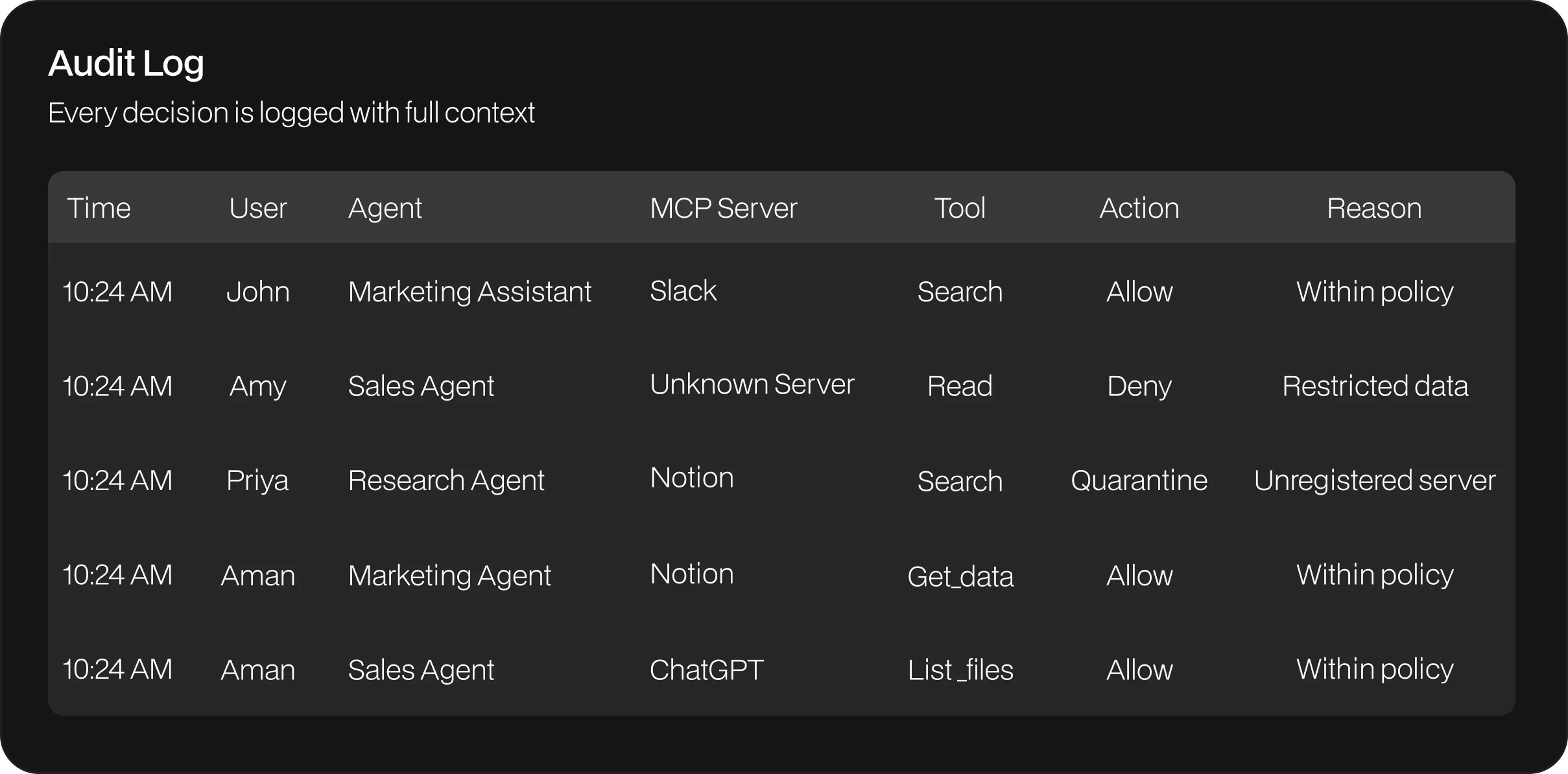
How LangProtect secures AI agents and MCP tool calls
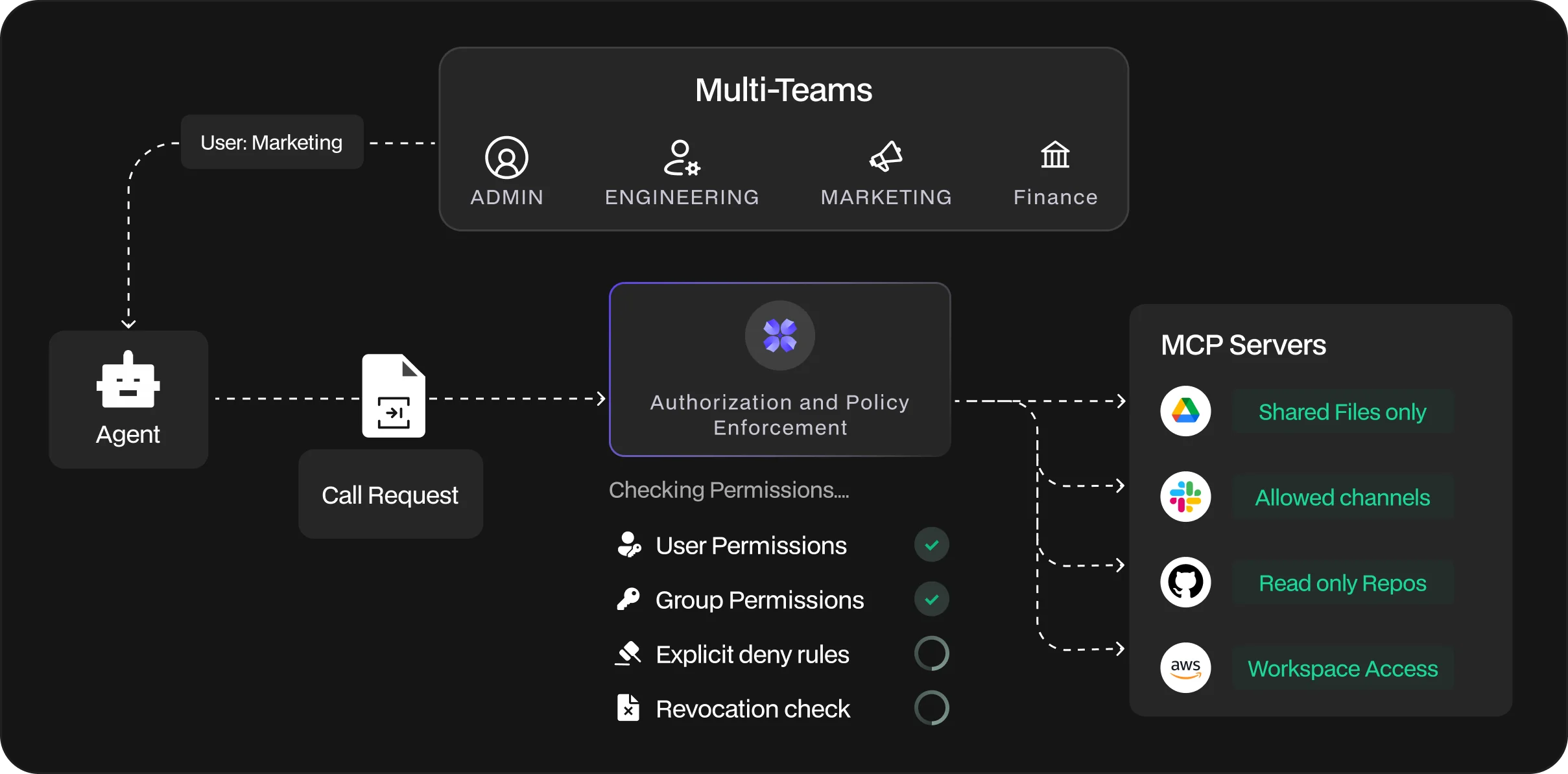
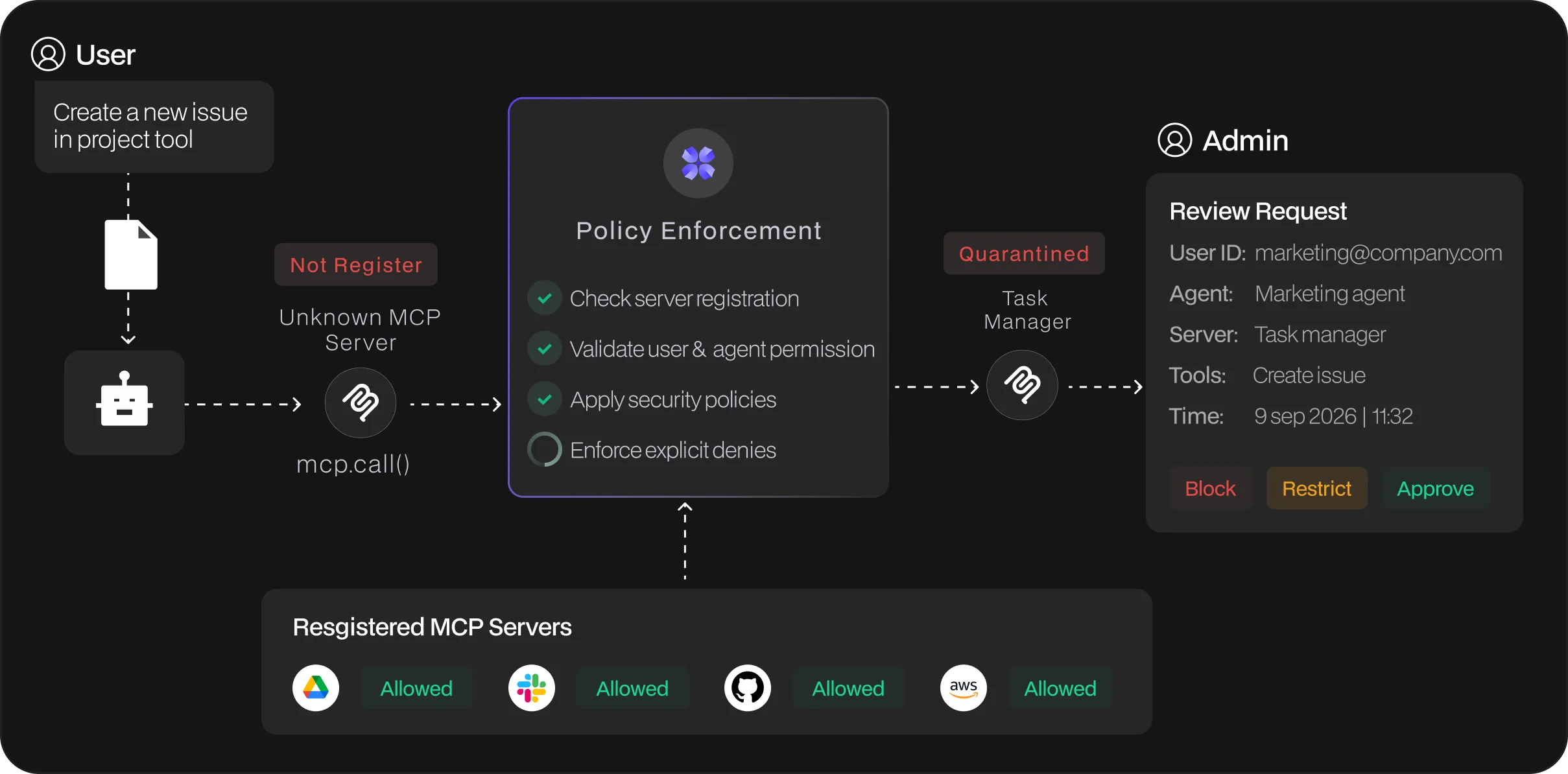
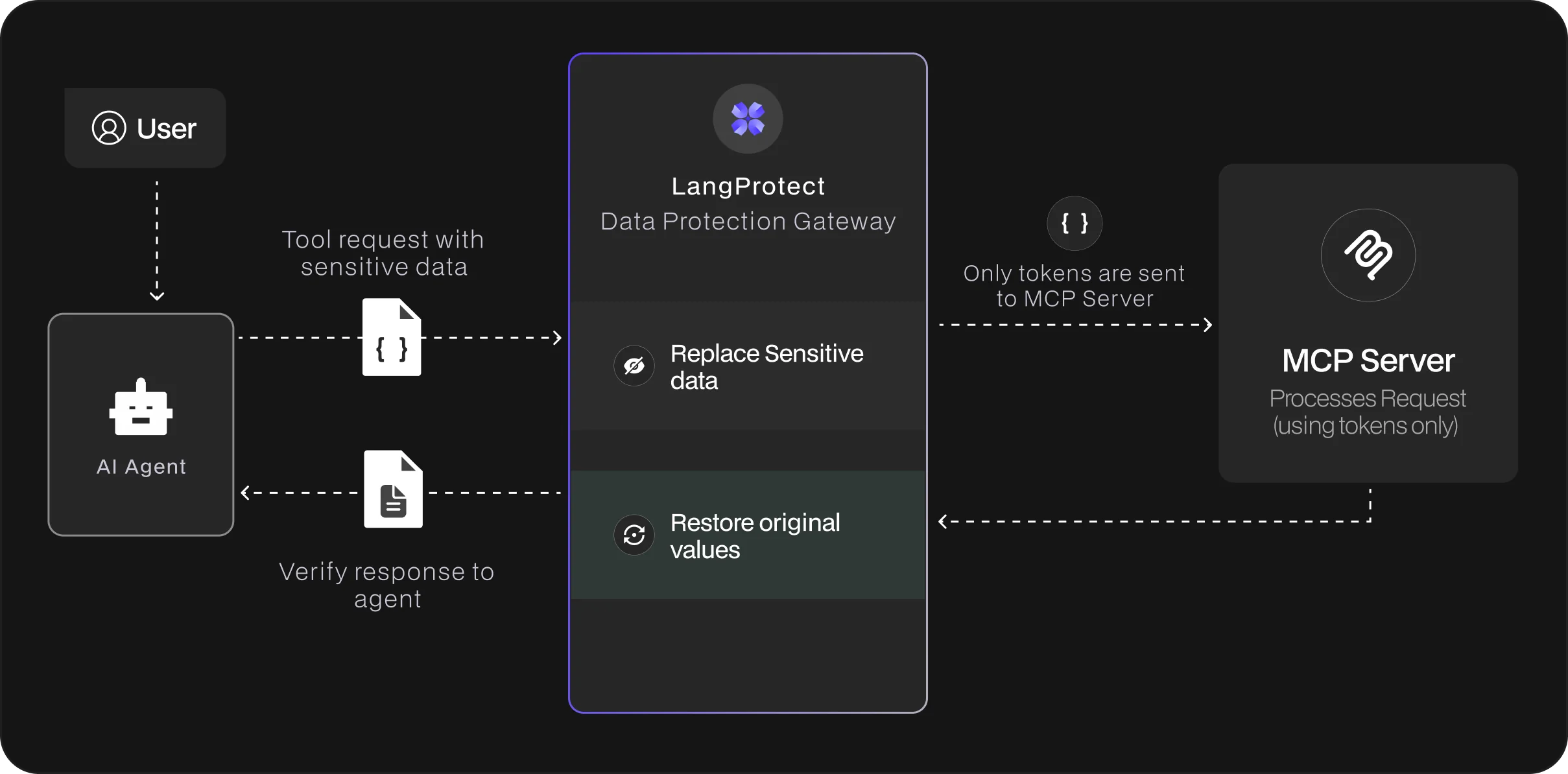
LangProtect gives security teams visibility and control across the agent lifecycle, it sits between agents and the MCP servers they call and checks each routed tool call against the user's permissions, the target server and the requested action before it runs.
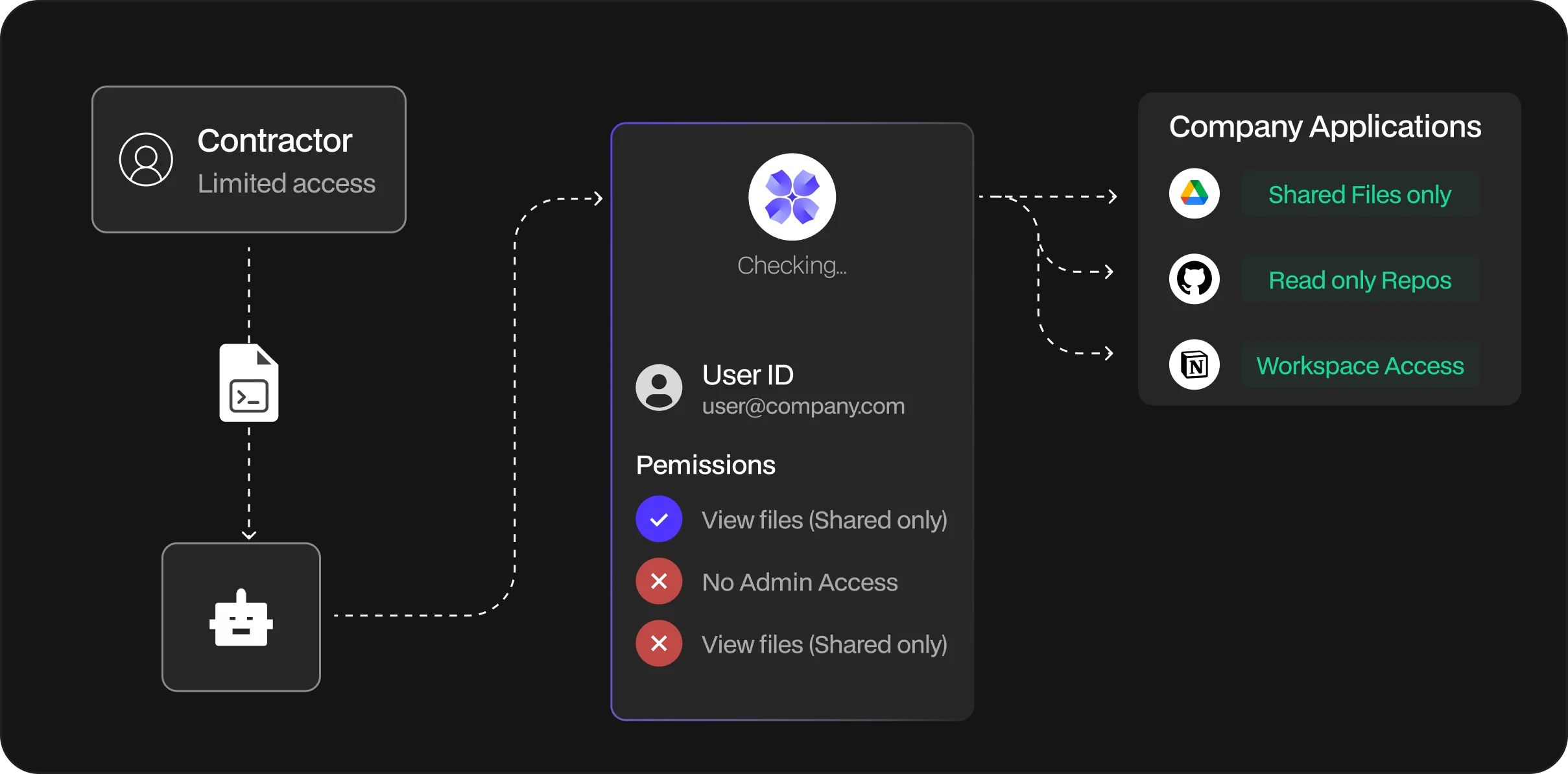
LangProtect authorizes every agent tool call against the permissions of the user the agent represents, not the application's credentials. A contractor's agent is limited to contractor access, even when the application holds admin keys.
Built to govern AI agents and MCP at enterprise scale
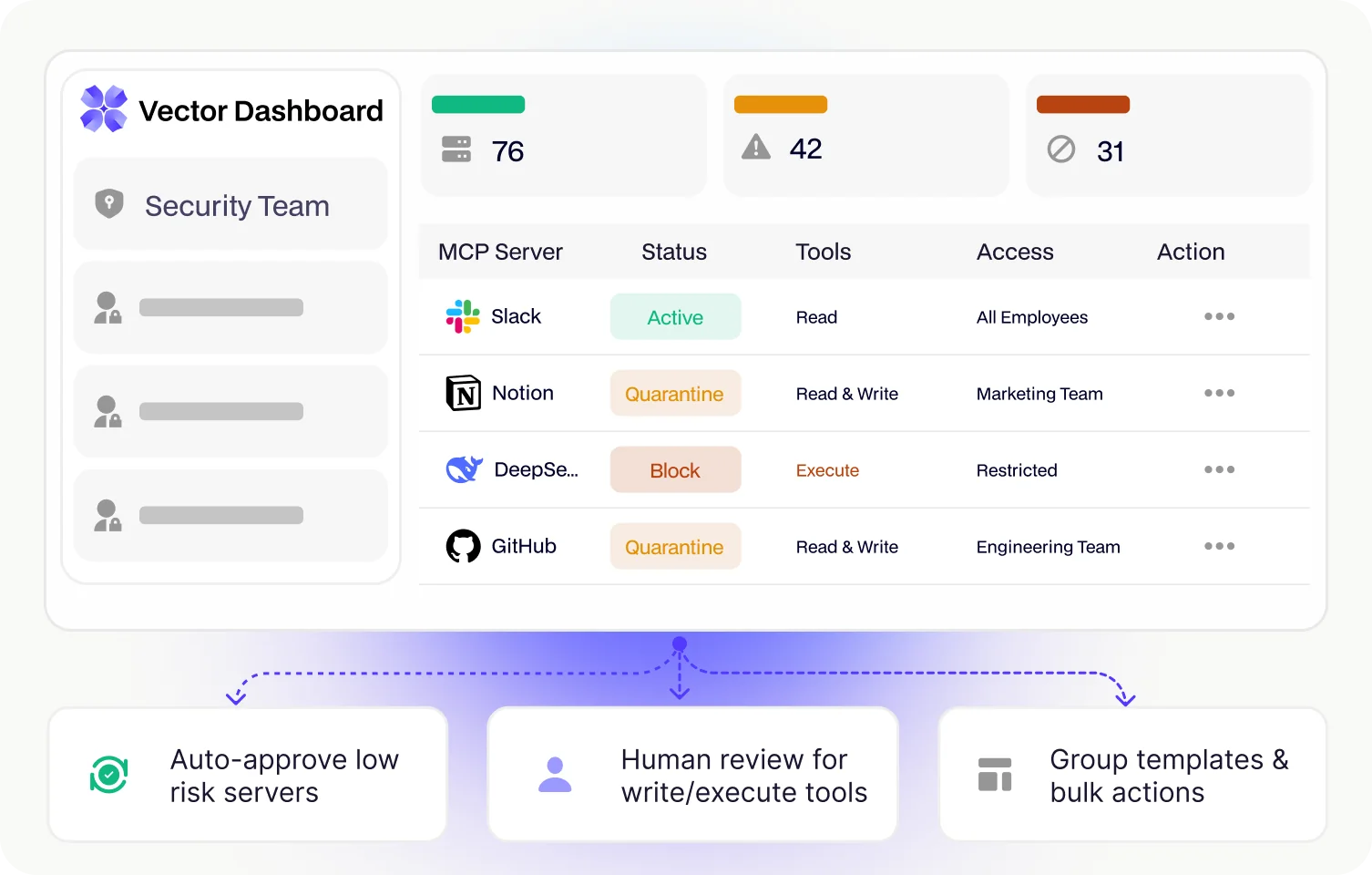
Centralized control for organization-wide rollouts
LangProtect Vector gives security teams one dashboard for all MCP server agents to use, whether active, quarantined or blocked. Admins manage access through a permission matrix, group templates and bulk actions. Auto-approve rules clear about low-risk servers, and servers with write or execute tools always get human review.
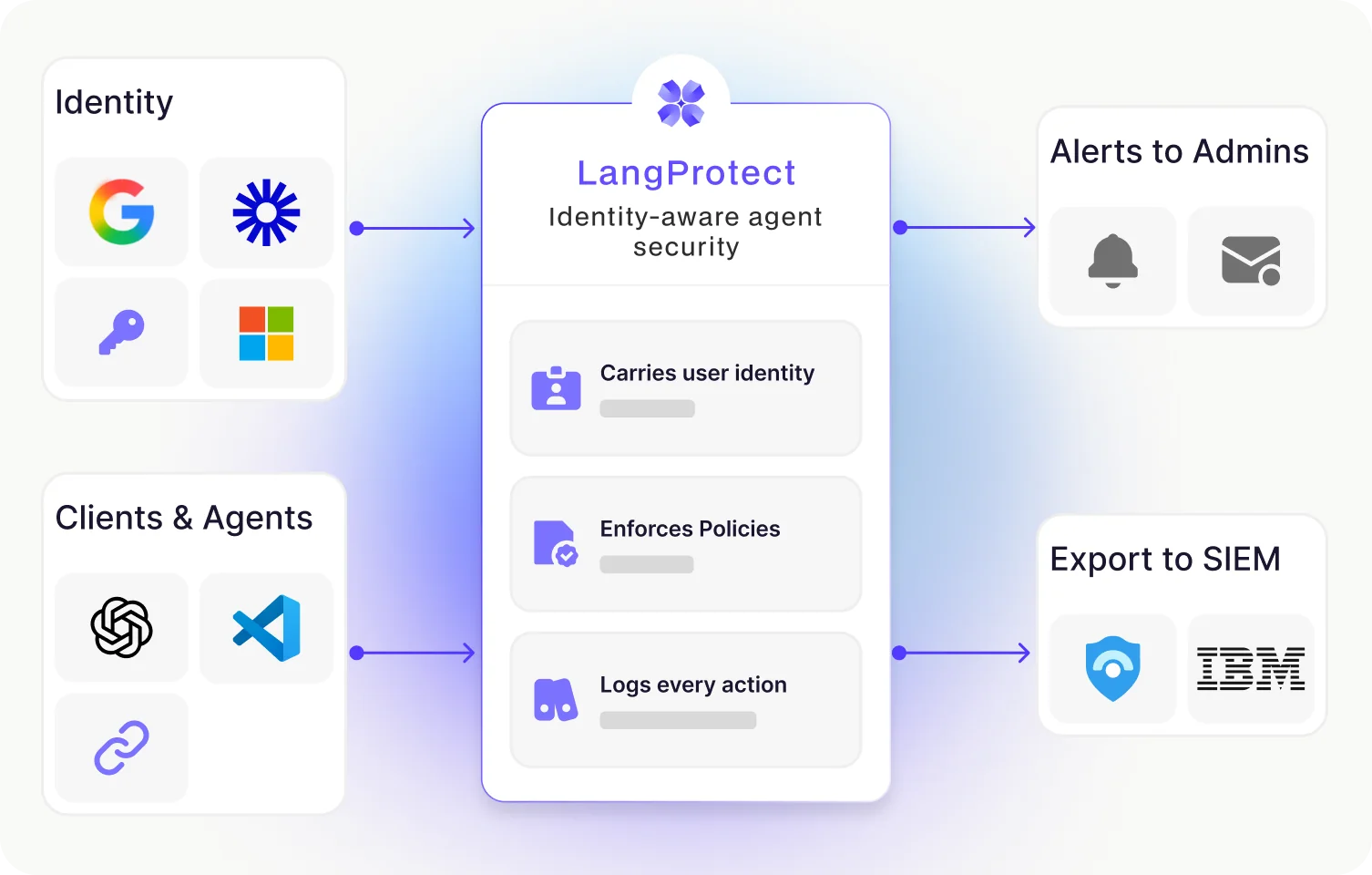
Integrates with your identity, agent and security stack
Vector takes user identity from your SSO session or application token and carries it through multi-agent pipelines. Chat clients, code editors and agent frameworks connect through a configuration change. Alerts reach admins in-app, by email or in Slack, and decision logs export to your SIEM.
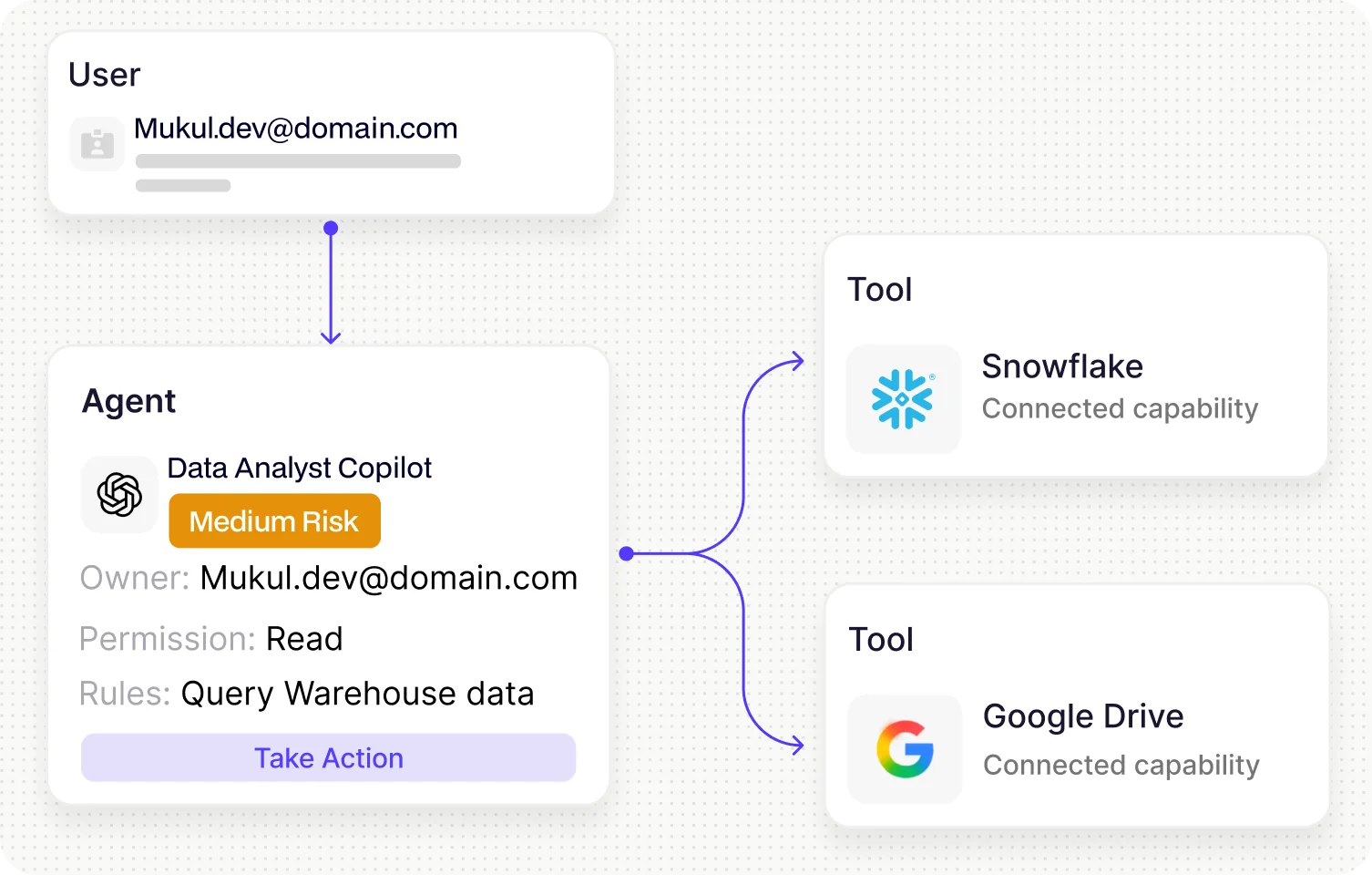
Risk-informed MCP server approvals
Vector shows each new MCP server's risk score, tool list and requesting users before an admin approves it. Admins can grant full access, restrict it to named groups, allow discovery only, or block the server with a redirect. Tools added after approval are flagged for review.
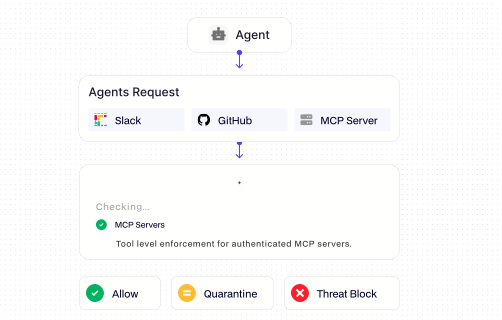
Agent-aware decisions that keep workflows running
Vector returns a structured allow, deny, quarantine or threat-block decision, so agents can explain outcomes instead of failing silently. Denied users request access in one click. New grants apply on the next call without a session to restart, and pipelines stop cleanly at the first unauthorized step.
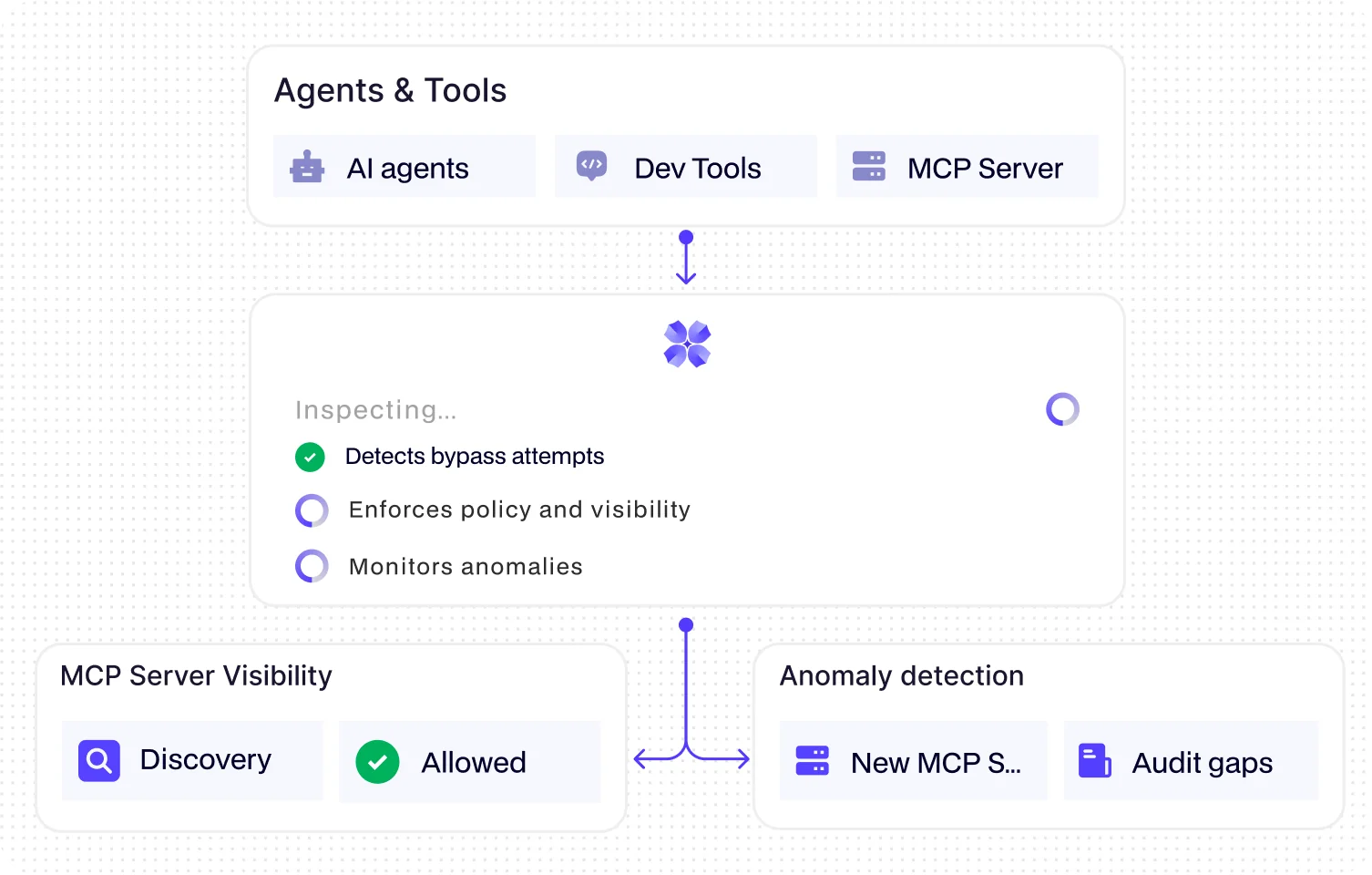
Hardened against bypass and reconnaissance
Vector routes framework tool calls through an SDK wrapper and covers other hosts with a network-level proxy. Servers with discovery denied stay invisible to agents. Anomaly detection flags spikes in denials, bursts of new MCP servers, and gaps in a user's audit history.
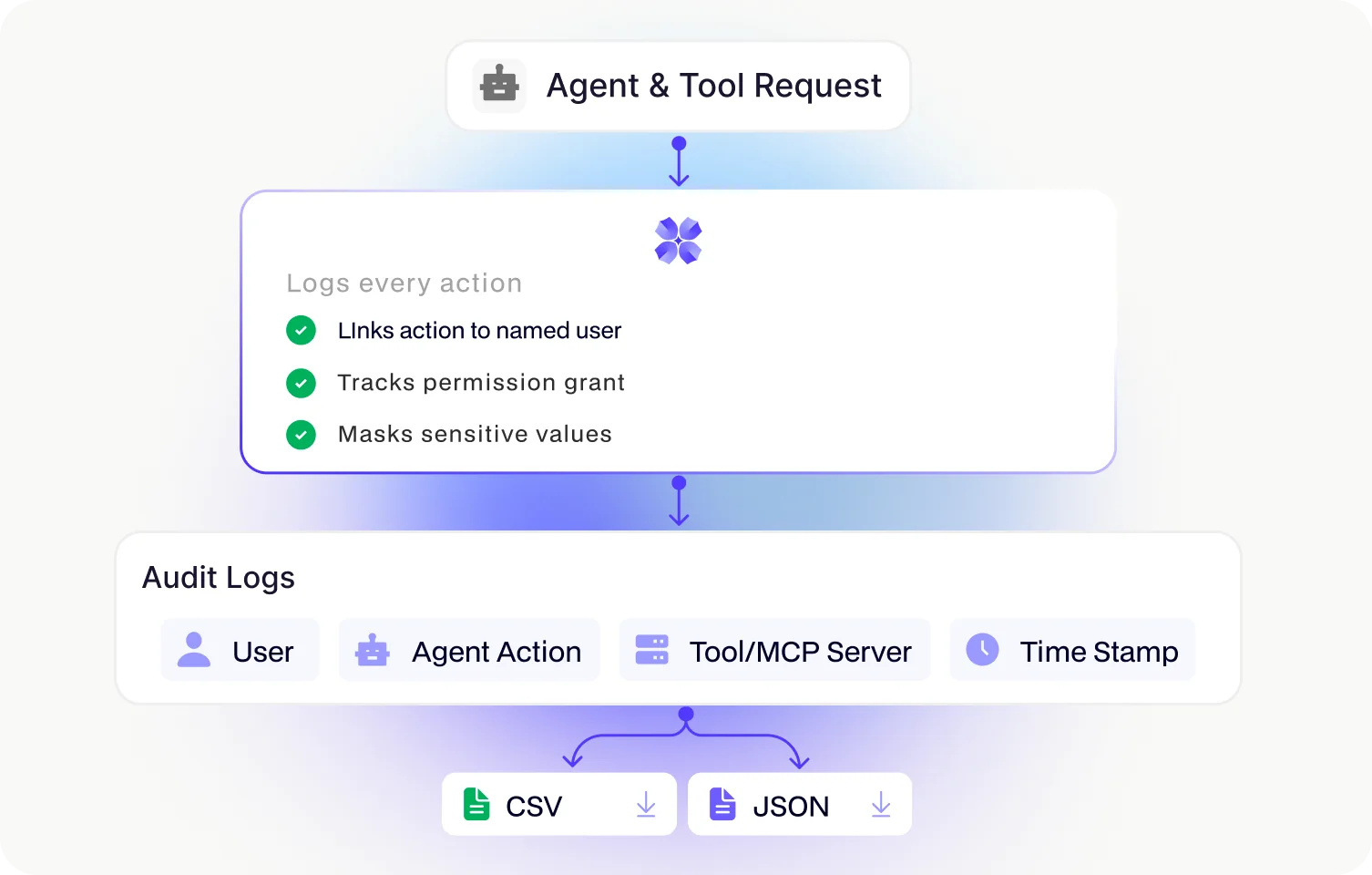
Designed for high-scrutiny compliance and audit programs
Vector ties every agent action to a named user, the permission grant behind it and the admin who issued it. Time-bound grants cover contractor access, and sensitive values are masked before logging. Permission sets and audit logs export as JSON or CSV for HIPAA, GDPR and internal audit reviews.
Secure AI Agents Before They Take Action
Enforce user-aware access and real-time policies across agent workflows, tools, MCP connections, and enterprise systems.